Best Solar Inverters for Small Homes: Smart, Reliable Picks
Solar & Renewable Energy
Solar systems are becoming more common in small homes. Higher grid costs, better batteries, and smarter inverters are making solar a real option for everyday homeowners. The main question now isn’t whether to go solar. It’s which inverter will run your home smoothly without surprises.
Here are clear, practical insights and real-world costs to guide you in choosing the right solar inverter for a small home, focusing on performance and reliability.
What Small Homes Actually Need From Solar Inverters
For small homes, daily inverter usage typically ranges from 1.5 kW to 5 kW. When choosing an inverter, homeowners should consider efficiency, battery compatibility, and how it handles voltage swings, which can be surprisingly common in older wiring.
Modern homes need inverters that reliably power refrigerators, lights, fans, TVs, routers, and occasional heavy loads like washing machines or microwaves. An inverter that trips constantly under peak load can be frustrating, so checking its surge capacity is key.
Efficiency matters more than most people realize. A good inverter today should operate at 95 to 98 percent efficiency, meaning it converts nearly all solar energy into usable electricity with minimal loss. This can make a noticeable difference over time, especially if your roof space is limited.
It’s also helpful to look for inverters with simple monitoring options, either through an app or a small display. Being able to see real-time energy usage and solar production helps spot issues early and adjust household habits to get the most out of your system.
According to the International Energy Agency (IEA, 2023), homes with high-efficiency inverters paired with smart monitoring see up to 15 percent more effective solar usage annually.
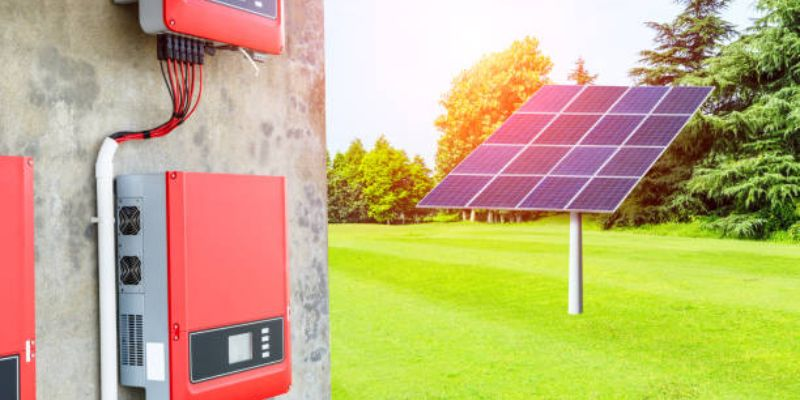
Hybrid vs Off-Grid Inverters for Small Homes
Before picking a solar inverter, it’s important to decide whether a hybrid or off-grid system fits your home. The choice affects cost, battery size, and how
A hybrid solar inverter combines solar panels, batteries, and the electrical grid into a single system. During the day, it runs on solar power. At night, it switches to stored battery power. If the batteries run low, it automatically draws from the grid. This setup is especially useful in urban and semi-urban areas where grid power can be unreliable.
One practical tip is to size your batteries for a few hours of backup rather than full-night coverage, which saves money without affecting daily use.
An off-grid inverter works entirely independently of the electrical grid. It’s designed for rural homes or places where grid power is unavailable. This system requires larger batteries and careful planning to match solar production with household demand. It can be more expensive upfront but gives complete energy independence.
In general, hybrid systems tend to be more efficient for small homes because they reduce the need for oversized batteries. According to the National Renewable Energy Laboratory (NREL, 2022), homes using hybrid inverters with moderate battery storage can cover up to 90 percent of energy needs without oversizing the system.
Choosing an inverter with built-in monitoring makes it easier to track battery health and energy usage, helping homeowners avoid unnecessary replacements.
Best Solar Inverters for Small Homes
Huawei SUN2000 Series
Huawei continues to rank among the best solar inverters for residential use. The SUN2000 series is popular for small homes due to its compact design and smart monitoring.
These inverters offer up to 98.6 percent efficiency and support lithium battery systems. Built-in AI helps detect arc faults early, improving safety. A 3 kW unit comfortably powers a small apartment with basic appliances.
In many regions, solar inverter prices for this model range from $750 to $1,100 depending on capacity.
SMA Sunny Boy
SMA remains a trusted name for homeowners looking for durability. The Sunny Boy series suits small homes with stable grids and modest battery needs.
Its strength lies in voltage tolerance, which protects appliances during grid fluctuations. While it lacks some advanced battery features, it remains a reliable small home solar inverter for grid-tied systems.
Efficiency averages 97 percent, and warranty support is among the best in the industry. SMA systems are commonly used in Europe and North America [1].
Growatt SPF Hybrid Series
Growatt has become a favorite in emerging solar markets. Their SPF hybrid line is designed specifically for residential setups under 5 kW.
As a hybrid solar inverter, it supports multiple battery types and allows easy expansion. Homeowners appreciate the simple interface and stable performance under high temperatures.
Growatt units typically cost 15–25 percent less than premium brands, making them attractive where solar inverter prices are a key concern.
Victron Energy MultiPlus
Victron Energy focuses on off-grid reliability. The MultiPlus line is often chosen when uninterrupted power matters more than cost.
This off grid solar inverter handles surge loads extremely well, making it ideal for homes with pumps or freezers. It integrates seamlessly with large battery banks and offers advanced monitoring tools.
Although pricing is higher, Victron systems are known to last over a decade with proper installation [2].
GoodWe ES and EM Series
GoodWe balances affordability and performance, earning a place among the best solar inverters for small households.
These hybrid models switch between solar, battery, and grid power smoothly. They are commonly used in homes consuming 2–4 kWh daily.
Efficiency stays above 96 percent, and system noise is low. For many users, GoodWe represents the sweet spot between premium and budget options.

What Small Homes Spend on Solar Inverters
In the U.S., the average homeowner spends about $1,000 to $3,000 on a residential solar inverter, with many systems around $2,000 before installation. Prices vary by model, capacity, and features.
For small home systems:
A 2 kW inverter commonly falls around $800–$1,200.
A 3 kW unit usually costs $900–$1,500.
For 5 kW hybrid inverters that can support batteries or backup power, expect roughly $1,200–$2,800 depending on brand and smart features.
Installation adds labor and wiring costs, which often run $300–$800 for the inverter portion but can go higher if electrical upgrades are needed. Choosing an inverter size that matches your solar array and future battery plans helps avoid extra labor.
Battery costs are separate and vary widely. A small home battery pack can range from $3,000 to $8,000 or more, depending on capacity and chemistry. Many homeowners size batteries to cover a few hours of backup rather than full overnight use to save money.
Electricity savings depend on local utility rates and sun exposure. Typical annual reductions in electric bills for small homes are around $900–$1,700 for a complete 5 kW system with net metering, though this varies by state and usage patterns.
Most solar investments still pay for themselves in roughly 6–10 years when you factor in installation costs, solar production, and local incentives like the federal tax credit.
How to Choose the Right Inverter for Your Home
Choosing the right solar inverter isn’t about picking the model with the most features. It’s about matching your energy use and how your home gets power.
A hybrid inverter works well if you have regular access to the grid. It uses solar power first, then batteries, and only draws from the grid when needed. This keeps essentials running during outages without requiring oversized batteries.
If your home has unreliable or no grid power, an off‑grid inverter with strong surge capacity is a better choice. Look for models that handle the startup power of large appliances without shutting down. Experts often recommend sizing the inverter’s continuous rating about 20 percent above your highest expected load to prevent nuisance trips.
Warranty terms are worth checking. Five years is standard, but many reputable brands offer ten years or more. Longer warranties usually indicate solid build quality and can save money if repairs are needed. It also helps to consider how responsive customer support is, since real-world issues with inverters do occur.
Most modern inverters come with monitoring apps. Seeing real-time data on solar production, battery levels, and energy use lets you spot issues early and adjust habits to reduce waste. Apps that track historical trends or send alerts can help extend battery life and lower maintenance costs over time.
Make sure your inverter matches your panel size and battery type. Not all inverters work with every battery chemistry, and incompatibility can limit options later.
Common Mistakes Small Homeowners Still Make
Many buyers oversize their inverter. A 5 kW unit for a home using 1.5 kW daily increases costs without benefits.
Others ignore ventilation. Even the best small home solar inverter will fail early if installed in hot, enclosed spaces.
Some homeowners focus only on solar inverter prices and overlook efficiency losses. A cheaper inverter that wastes power costs more over time.
Where Solar Technology Is Heading After 2026
Residential inverters are becoming smarter, quieter, and more compact. AI-based load prediction is improving battery efficiency, while remote diagnostics reduce maintenance costs.
According to energy research agencies, inverter failure rates have dropped by nearly 30 percent over the past five years due to improved electronics [3].
This trend benefits small homes most, as systems now require less technical oversight.
Power Your Home With Confidence
Choosing the right inverter is about reliability, not hype. Focus on real usage, verified efficiency, and long-term support.
Whether you choose a hybrid solar inverter for flexibility or an off grid solar inverter for independence, investing in one of the best solar inverters ensures stable power, lower bills, and peace of mind for years ahead.
References
[1]International Energy Agency. Renewable Energy Market Update. Available at: https://www.iea.org/
[2]Victron Energy. Company Overview and Technical Documentation. Available at: https://www.victronenergy.com/
[3]S. Department of Energy. Solar Energy Technologies Office. Available at: https://www.energy.gov/
Share this article:
Recommended For You







ADVERTISEMENT